
If your garage door jerks when opening, you are not imagining a problem. A healthy door should rise in one smooth, steady motion, and a shudder, a hesitation, or a shake halfway up is the system telling you something needs attention. The cause can be as simple as dry rollers or as serious as a worn spring, which is why it pays to understand what you are looking at before you decide what to do next. This guide explains why a garage door jerks or shakes while opening, which checks are safe to do yourself, and which repairs belong in the hands of a professional. If your door is acting up right now, request service online and we will get a technician on the way.
What It Means When a Garage Door Jerks When Opening
A garage door is the largest moving object in most homes. It is carried by springs, guided by rollers and tracks, and lifted by an opener. When all of those parts work together, the door moves quietly and evenly. When one of them wears out, binds, or falls out of adjustment, the motion becomes uneven.
The Door & Access Systems Manufacturers Association (DASMA) puts it plainly: if your door does not go up and down smoothly, you may have an unsafe condition. Even older doors, the association says, should operate smoothly.
That makes jerking and shaking more than an annoyance. It is a warning sign worth taking seriously.
Garage Door Jerks vs. Shakes vs. Vibrates: What Is the Difference?
Homeowners use several words for the same problem, but the pattern you notice can help narrow down the cause.
- Jerking: The door hesitates, lurches, or moves in short bursts as it rises.
- Shaking: The door wobbles side to side or trembles as it travels.
- Vibrating: You feel or hear a steady rumble through the door, ceiling, or wall.
- Stopping and starting: The door pauses mid-travel before moving again.
Write down what you see and hear, and when it happens. A technician can use those details to find the problem faster.
Common Reasons a Garage Door Jerks When Opening
Most cases trace back to a handful of causes. Here is the short list before we look at each one:
- Dry or unlubricated moving parts
- Worn, cracked, or flat-spotted rollers
- Dirty, bent, or misaligned tracks
- A door that is out of balance
- Worn or weakening springs
- Uneven or frayed cables
- An opener that is worn, loose, or set incorrectly
- Weather and temperature changes
- Damage from a past impact
Cause 1: Dry or Unlubricated Parts
Metal moving against metal creates friction, and friction creates uneven motion. Hinges, roller stems, and other moving parts need lubrication to glide smoothly.
The International Door Association (IDA) says squeaking or squealing as the door opens may point to a part that needs lubrication. Its weather guidance also recommends using a silicone-based lubricant on moving parts.
Dry parts often cause a rhythmic squeak along with the jerk. Follow your door manufacturer’s directions for what to lubricate, and avoid grease on the tracks, which can collect dust.
For a deeper look at what each noise can mean, read our guide to garage door noises explained.
Cause 2: Worn or Damaged Rollers
Rollers carry the door along the track, so a flawed roller can make the whole door shudder. Over time, rollers can wear, crack, or develop flat spots, and a failing roller will not turn smoothly.
IDA notes that a grinding noise can indicate worn rollers. If you hear grinding along with a jerk, the rollers are a prime suspect.
Replacement rollers come in different styles and materials, and the right choice depends on your door and how often you use it. Our posts on garage door rollers replaced and choosing replacement rollers for Las Vegas homes explain your options.
Cause 3: Dirty, Bent, or Misaligned Tracks
Tracks guide the rollers on both sides of the door. If a track collects debris, develops a dent, or drifts out of alignment, the rollers catch and the door shakes as it passes the problem spot.
IDA advises inspecting tracks and rollers for debris, rust, or signs of wear, and cleaning the tracks with a dry cloth. That is a reasonable check you can do from the floor.
Bent or shifted tracks are different. Adjusting track position involves mounting hardware, and DASMA warns homeowners not to adjust mounting surfaces or brackets. If a track looks bent or out of place, call a technician. Our post on what to know if your garage door is off its tracks explains the risks.
Cause 4: A Door That Is Out of Balance
A properly balanced door is supported almost entirely by its springs. The opener only guides it. When the balance is off, the opener has to work harder, and the door can move in fits and starts.
LiftMaster’s manual describes this symptom directly: an opener that strains to operate the door may mean the door is out of balance or a spring is broken. The manual also gives a simple balance idea. With the opener disconnected, a balanced door lifted halfway and released should stay in place, supported by its springs.
The manual is just as clear about what comes next: if your door binds, sticks, or is out of balance, call a trained door systems technician. An unbalanced door may not reverse when it should, which is a safety issue.
Cause 5: Worn or Weakening Springs
Springs do the heavy lifting. DASMA calls them arguably the most important and most dangerous part of your door, and notes that springs wear out. When they weaken, the door can feel heavy and move unevenly.
Two things matter here:
- Springs are under high tension. DASMA says not to try to remove, repair, or adjust springs.
- Replace springs in pairs. If your door has two springs, DASMA recommends replacing both even if only one has broken.
Our guides on warning signs of broken garage door springs, how long garage door springs last, and torsion vs. extension springs can help you recognize the signs. Spring repair is a job for a professional.
Cause 6: Uneven or Frayed Cables
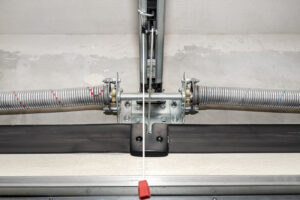
Lift cables connect the spring system to the bottom of the door on each side. If one cable is stretched, frayed, or tensioned differently from the other, one side of the door may rise faster than the other, and the door can twist and shake.
DASMA recommends visually inspecting the cables that attach the spring system to the bottom brackets, and warns that frayed or worn cables are in danger of breaking. LiftMaster adds that cable tension should be equal on each side of the door.
Look, but do not touch. Cables and bottom brackets are under extreme tension, and the manufacturer’s warnings are clear about leaving them alone.
Cause 7: Opener Problems
Sometimes the door is fine and the opener is the culprit. Common opener issues include a loose or dry drive chain, worn drive components, and travel or force settings that no longer match the door.
LiftMaster explains that if force settings are too light, door travel may be interrupted by reversals in the down direction and stops in the up direction. It also notes that weather can affect door movement, so occasional adjustments may be needed.
One warning applies to every homeowner: LiftMaster says never to use force adjustments to compensate for a binding or sticking door. Too much force can interfere with the safety reversal system.
Learn more about opener types in our guide to chain drive vs. belt drive openers.
Cause 8: Weather and Temperature Changes
Temperature swings affect metal. IDA explains that as temperatures drop, metal parts like springs, tracks, and hinges may contract, which can cause misalignment or squeaking and make the door noisier or harder to open.
Las Vegas has its own version of this. The National Weather Service lists a normal July high of about 104.5 degrees in Las Vegas, and our hot summers are hard on lubricants, springs, and rubber and plastic parts. Then December brings cooler nights, and the contrast can expose parts that were already worn.
Read more in our posts on how falling temperatures affect your garage door and the most common winter garage door problems.
Cause 9: Damage From a Past Impact
A bump from a car, a bike, or a stray ball can bend a panel, shift a track, or knock a roller loose. The door may seem fine at first, then start to shake weeks later as the damage spreads.
If you remember an impact, mention it to your technician. Our post on what to do if you accidentally back into your garage door explains what to check and why a professional inspection matters.
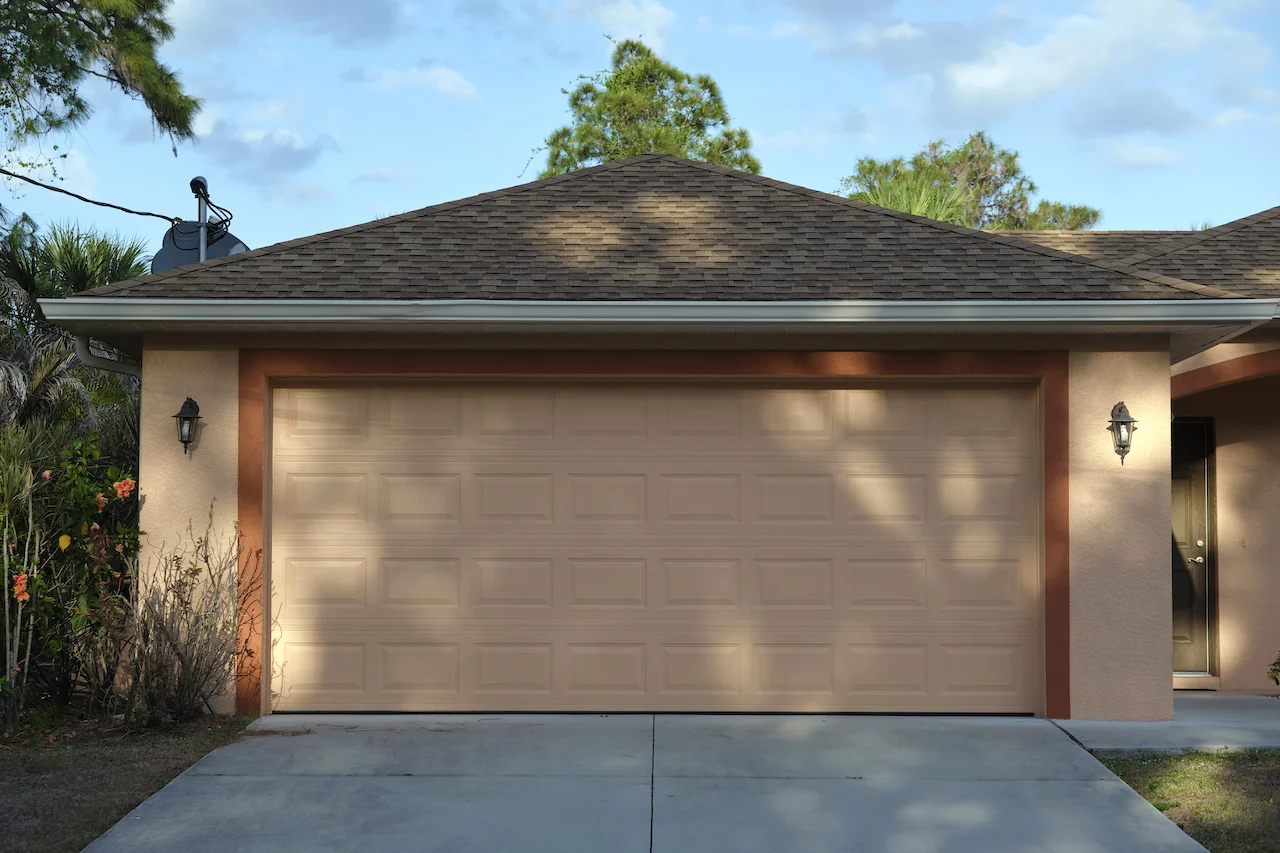
Las Vegas Conditions That Can Make a Jerky Door Worse
Our desert climate puts extra demands on garage doors. Long, hot summers can dry out lubricants and wear on springs and plastic parts, and fine dust blown in by wind can settle into tracks and rollers. When that grit builds up, doors that once ran quietly may start to catch and shake.
That is why local upkeep matters. Our posts on why garage door springs fail in Las Vegas heat and preparing your garage door for spring wind and dust storms explain what to watch for through the year.
What to Tell the Technician When You Call
The more details you share, the faster we can help. Before you call, note:
- When it started: Suddenly, or gradually over weeks
- What you hear: Squeaking, grinding, popping, or scraping
- When it happens: Only on opening, only on closing, or both
- Where it happens: At the start, midway, or near the top
- What changed recently: Weather, an impact, a new opener, or a power outage
- Your door and opener details: Brand, age, and number of cars
Where in the Travel Does the Door Jerk?
The point in the door’s path where the problem appears can offer clues. These are general patterns, not a diagnosis, so use them as notes for your technician.
- At the very start: Possible opener, chain, or spring issues
- Low on the track: Possible roller, track, or hinge problems near the bottom
- Midway up: Possible balance, cable, or spring issues
- Near the top: Possible track curve, roller, or limit setting problems
- Only on one side: Possible uneven cables, a worn roller, or a bent track on that side
If you can safely record a short video of the door in motion, share it with the technician. It helps them know what to look for.
Is It the Door or the Opener?
This is the most useful question to answer. A simple manual test can help, if you do it carefully.
- Close the door and stay clear of the opening. Make sure no one is standing under or near the door.
- Disconnect the opener using the emergency release, following your opener’s manual.
- Lift the door by hand a short distance. Notice whether it feels smooth, heavy, or rough.
- Stop if anything feels unsafe. If the door feels extremely heavy, binds, or moves unexpectedly, step away and call a professional.
If the door is rough or heavy by hand, the problem is likely in the door system. If it moves smoothly by hand but jerks with the opener, the opener is more likely the cause. Either way, keep your hands away from springs, cables, rollers, and brackets.
Safe Checks You Can Do From the Floor
You can learn a lot without touching any dangerous parts. IDA’s safety guidance suggests a simple routine: look, listen, and learn.
- Look: Check the tracks, rollers, hinges, and cables for visible wear, rust, or damage.
- Listen: Note squeaking, grinding, popping, or scraping as the door moves.
- Clean: Wipe the tracks with a dry cloth to remove dust and debris.
- Lubricate: Apply silicone-based lubricant to moving parts as your manufacturer directs.
- Check the area: Clear the path of anything that could catch the door.
If you see a problem with the springs, IDA says not to attempt repairs yourself and to call a trained professional.
What You Should Never Do Yourself
The most important part of this guide is also the shortest. Some parts of a garage door are dangerous to touch.
- Never adjust springs, cables, or brackets. DASMA says these should be handled only by a trained door systems technician.
- Never use opener force settings to hide a sticking door. LiftMaster warns this can interfere with the safety reversal system.
- Never operate a door with a broken spring. DASMA says not to run the door until the spring is replaced.
- Never stand under a moving door. Keep people and pets clear of the opening.
For more on this topic, read why you should not attempt to repair your garage door yourself and why DIY repairs are especially risky in 100 degree weather.
Test the Safety Reversal System After Any Adjustment
If an opener has been adjusted, the safety reversal system should be tested. LiftMaster states that after any adjustment is made, the safety reversal system must be tested, and its instructions say a door must reverse on contact with a 1-1/2 inch high object, or a 2×4 laid flat, on the floor.
The test matters because a door that does not reverse can trap a person, a pet, or an object. If your door fails the test, call a trained technician.
The DASMA opener safety and maintenance guide also recommends making a monthly inspection and test part of your routine.
How a Professional Diagnoses a Jerking Garage Door
A technician approaches the problem methodically. At Precision Overhead Doors, every service includes a 25-point safety inspection by a licensed, insured technician. A typical visit includes:
- A conversation. You describe what you see, hear, and when it happens.
- A visual inspection. The technician checks rollers, tracks, hinges, cables, springs, and hardware.
- A balance and travel check. The door’s balance and movement are evaluated with proper tools.
- An opener check. Settings, drive components, and safety features are tested.
- A clear estimate. You receive transparent pricing before work begins.
Our technicians are LiftMaster Certified, background-checked, and trained to work safely around high-tension parts.
Common Garage Door Repairs for a Jerky Door
Depending on the diagnosis, a repair may include one or more of these:
- Roller replacement: Fresh rollers restore smooth travel.
- Track cleaning, alignment, or replacement: Corrects binding and shaking.
- Spring replacement and balancing: Restores proper lift support.
- Cable replacement: Brings both sides of the door into proper tension.
- Lubrication and tune-up: Reduces friction across moving parts.
- Opener repair or adjustment: Corrects drive and setting problems.
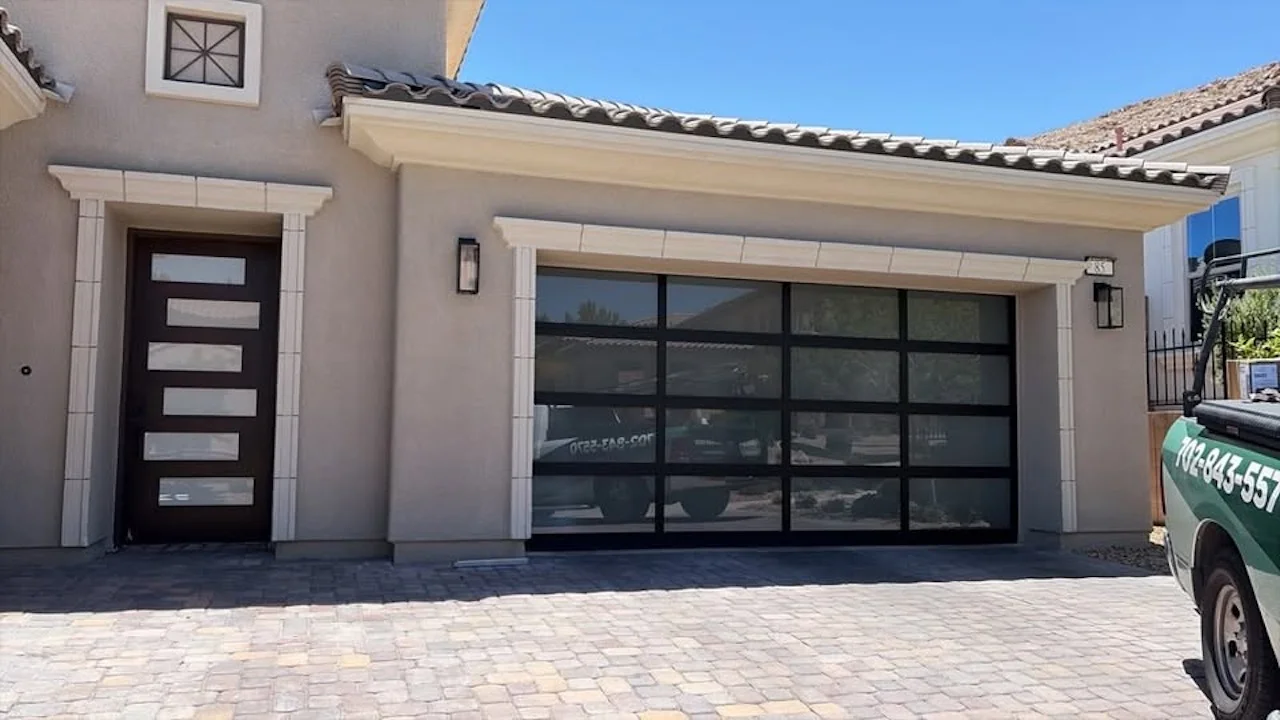
Repair or Replace? How to Decide
Not every jerky door needs a new one. A single worn part is often a simple, affordable fix. Replacement makes sense when problems stack up.
Consider replacement if:
- The door has panel damage or sections that no longer align
- Multiple parts are worn at once
- Repairs are becoming frequent
- The door is old and no longer meets your needs
Our guide on whether your garage door needs servicing or replacing walks through the decision. Financing is also available if you decide to upgrade.
Why December Is a Smart Time for a Tune-Up
December is a natural time to look at your door. The year is ending, the weather is cooler, and a small issue like a jerky door is easier to handle before it becomes an emergency.
A tune-up lets a technician check the springs, rollers, tracks, and opener, lubricate moving parts, and catch wear early. Read why December is the best time to schedule end-of-year garage door service.
How to Keep Your Garage Door Moving Smoothly
Prevention costs less than repair. A simple routine goes a long way.
- Inspect monthly. Look and listen for changes.
- Clean the tracks. Wipe away dust and debris.
- Lubricate moving parts. Use a silicone-based product.
- Test the safety reversal. Do it on a regular schedule.
- Schedule professional service. Our team recommends regular tune-ups.
- Act early. Small noises often come before bigger failures.
Use our garage door maintenance checklist to stay on track, and see how often you should service your garage door.
When to Stop Using Your Door and Call Right Away
Some situations call for immediate action. Stop using the door and call a professional if you notice:
- A loud bang followed by a door that will not lift
- A visible gap in a spring or a frayed or loose cable
- A door that is crooked, off its track, or hanging unevenly
- A door that will not reverse during the safety test
- Smoke, burning smells, or a hot opener motor
For urgent situations, our line is answered around the clock. Read what to expect from emergency garage door repairs before you call.
Serving Las Vegas Homeowners Since 2000
Precision Overhead Doors has served Las Vegas since 2000 and has helped more than 120,000 customers. We serve Las Vegas, Henderson, North Las Vegas, Summerlin, Spring Valley, Enterprise, Boulder City, and nearby communities.
You can read what customers say on our reviews page, explore our service locations, and learn about our warranty.
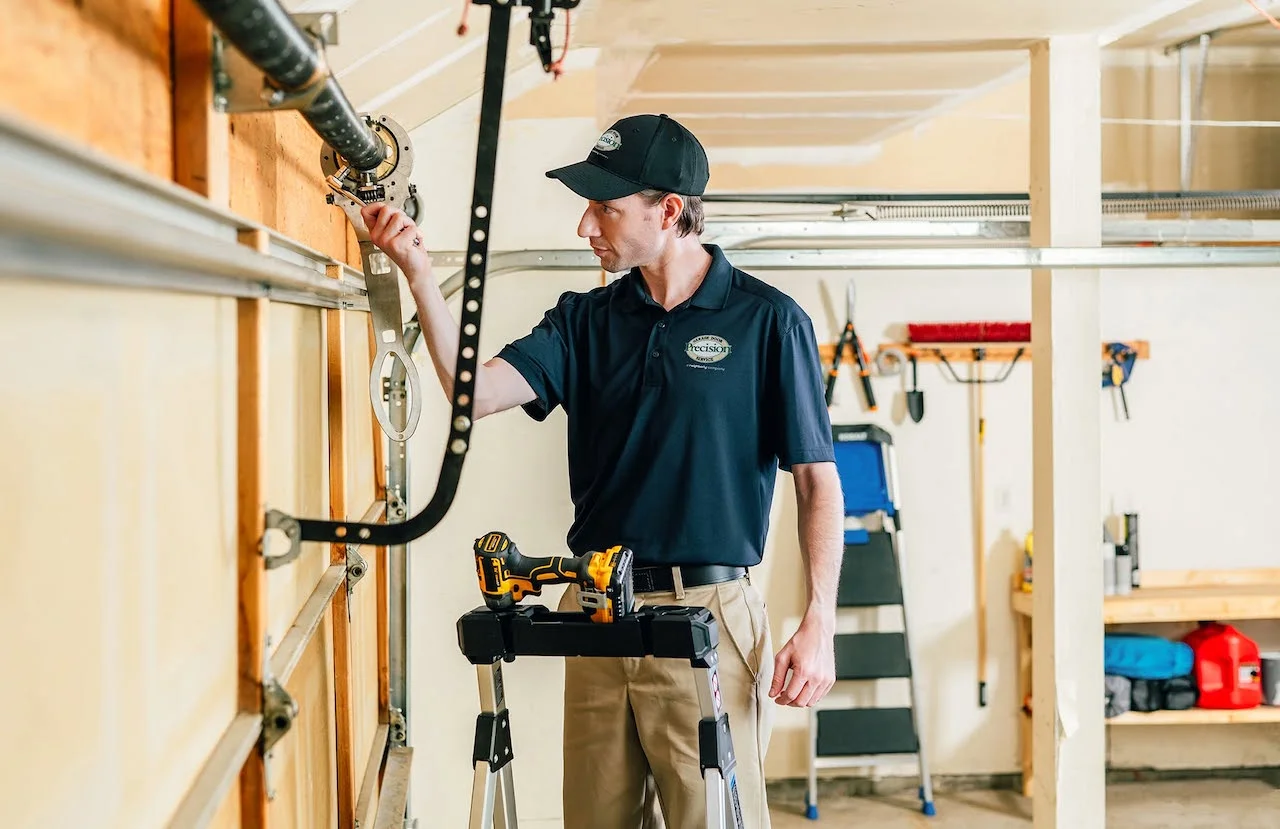
Get Your Jerking Garage Door Fixed by Precision Overhead Doors
Now you know the main reasons a garage door jerks when opening: dry parts, worn rollers, damaged tracks, balance problems, tired springs, uneven cables, and opener issues. Some of these start small, and some involve parts that are dangerous to touch, so the safest move is to have a trained technician take a look. Precision Overhead Doors offers fast, upfront service across Las Vegas. Call (702) 637-2700 or visit our contact page to schedule a visit today, and let us bring your door back to smooth, quiet, reliable operation.
FAQ: Garage Door That Jerks or Shakes
Why does my garage door jerk when opening?
Common causes include dry parts, worn rollers, dirty or bent tracks, an unbalanced door, worn springs, uneven cables, and opener problems. A technician can find the exact cause.
Why does my garage door shake when opening?
Shaking often comes from worn rollers, track problems, or an unbalanced door. It can also come from loose hardware or an opener that needs adjustment.
Is a jerking garage door dangerous?
It can be. DASMA says a door that does not go up and down smoothly may be an unsafe condition, so have it checked.
Can I fix a jerky garage door myself?
You can clean the tracks, lubricate moving parts, and inspect from the floor. Springs, cables, and brackets are under high tension and should be handled only by a trained technician.
Should I lubricate my garage door?
Lubrication can help. IDA suggests a silicone-based lubricant on moving parts, and your manufacturer’s instructions should guide what to lubricate.
Can the opener cause the door to jerk?
Yes. A loose or dry chain, worn drive parts, or incorrect travel and force settings can all cause jerky motion. Never use force settings to cover up a binding door.
Does cold weather make a garage door shake?
It can. IDA notes that metal parts may contract as temperatures drop, which can cause misalignment, squeaking, or a harder-to-open door.
How much does it cost to fix a jerking garage door?
Cost depends on the cause and the parts involved. Precision Overhead Doors offers free on-site estimates with upfront pricing before work begins.
How often should I service my garage door?
Regular professional service helps catch wear early. Read our guide on how often to service your door, and schedule a tune-up if it has been a while.
Do you offer same-day service in Las Vegas?
In most cases, yes. Call (702) 637-2700 to ask about availability in your area.
Related Topics