
A hot garage can make everyday tasks uncomfortable, whether you’re working on a project, exercising, or unloading your car. In Las Vegas, afternoon sun, an uninsulated garage door, and heat from a recently driven vehicle can all contribute to the problem.
The best way to cool a garage depends on how you use it. Fans help you feel more comfortable, insulation and shade reduce heat gain, and air conditioning lowers the actual air temperature. Combining the right methods usually works better than relying on one solution.
Here are six garage cooling solutions to consider for your Las Vegas home.
Why Does Your Garage Get So Hot?
Garages often have less insulation and ventilation than the living areas of a home. Sunlight heats the roof, walls, and garage door, while gaps around doors and windows allow hot outdoor air inside.
A west-facing garage can receive strong afternoon sun. A dark-colored door can absorb more solar heat, and a vehicle parked after driving releases heat as its engine and exhaust system cool.
Before choosing a cooling system, consider when your garage gets hottest, whether it is insulated, and how much time you spend there. A garage used for storage has different cooling needs from a daily workshop, home gym, or other functional garage space.
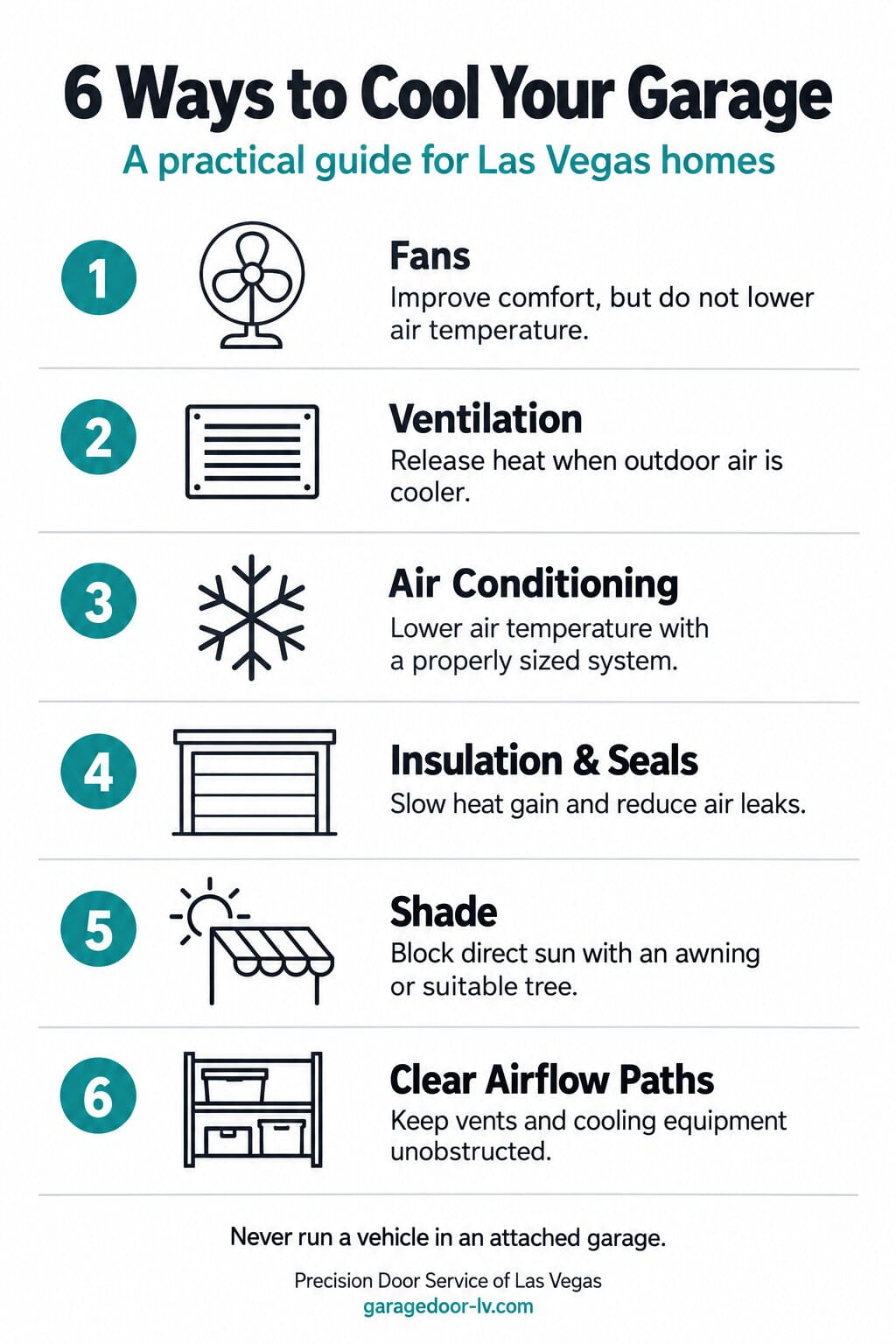
6 Garage Cooling Solutions
1. Use Fans for Personal Comfort
A shop fan, floor fan, or ceiling fan can make working in your garage more comfortable by moving air across your skin. However, a circulating fan does not lower the room’s air temperature.
Position the fan so its airflow reaches your work area, and keep its intake and outlet clear. Turn it off when the garage is unoccupied unless it serves a separate ventilation purpose.
If outdoor air is cooler than the air inside, a fan aimed out of an exterior opening can help remove accumulated heat. Another opening is needed to let replacement air enter.
Best for: Improving comfort during short visits or supplementing other garage cooling methods.
2. Improve Garage Ventilation
Ventilation exchanges indoor air with outdoor air. It can help release trapped heat when the garage is hotter than the air outside, especially during cooler morning or evening hours.
Options include appropriately placed vents and mechanical exhaust fans. An effective system needs both an exhaust path and a source of replacement air. A roof vent serving an attic does not necessarily ventilate the garage below it.
Ventilation has limits during a Las Vegas summer. Bringing in hot afternoon air will not provide the same cooling as an air conditioner, and opening a cooled garage can increase its cooling load.
Before installing an exhaust system, have a qualified professional assess airflow, electrical needs, and any fuel-burning appliances in the garage.
Best for: Removing accumulated heat when outdoor conditions are favorable.
3. Choose an Appropriate Garage Air Conditioner
If you want to lower your garage’s air temperature for regular use, air conditioning may be worth considering. Portable units, window units, and ductless mini-splits are different systems with different installation requirements.
Portable Air Conditioners
A portable AC can provide cooling without a permanent indoor wall unit, but it still needs to discharge heat outdoors through an exhaust hose. The exhaust opening should be properly sealed, and condensate must be managed according to the manufacturer’s instructions.
Compare rated cooling capacity and efficiency rather than assuming every portable unit will cool a garage effectively. An uninsulated space with strong afternoon sun can be difficult to cool.
Window Air Conditioners
A window AC may be an option if the garage has a suitable opening. Check the unit’s installation requirements, electrical supply, and cooling capacity before purchasing.
Ductless Mini-Splits
A ductless mini-split connects an indoor air-handling unit to an outdoor unit. It can provide dedicated cooling for a frequently used garage without extending the home’s ductwork.
A qualified HVAC professional should assess the garage’s cooling load, select suitable equipment, and determine installation requirements. Garage size, ceiling height, insulation, sun exposure, and door-opening frequency all affect performance.
Best for: Workshops, exercise areas, and garages where sustained temperature reduction is needed.
4. Improve Insulation and Seal Air Leaks
Insulation slows heat transfer through the garage door, walls, and ceiling. It does not actively cool the garage, but it can help reduce heat gain and make an air conditioner’s job easier.
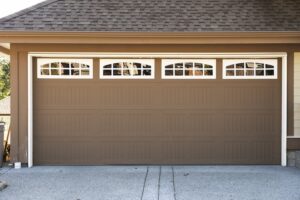
An insulated garage door may be especially useful when a large door receives direct sunlight. Compare the complete door’s construction and thermal performance rather than choosing by exterior material alone. Learn more about garage door materials and their differences.
Check the bottom seal and weatherstripping around the sides and top of the door. Worn, damaged, or missing seals can allow hot air, dust, and pests inside.
Wall and ceiling insulation may also help, depending on the garage’s construction. Keep required ventilation openings clear, and preserve the protective separation between an attached garage and the home.
Before adding insulation to an existing garage door, ask a garage door professional whether the added weight could affect its balance or operation. Read more about insulated garage doors and energy efficiency.
Best for: Reducing heat gain and supporting more effective air conditioning.
5. Reduce Direct Sunlight With Shade
Shade can reduce the solar heat reaching your garage door, walls, and windows. Start by identifying the surfaces that receive the strongest afternoon sun.
Depending on your property, options may include an awning, an exterior shade structure, or a strategically placed tree. Any structure should leave enough clearance for safe garage door operation.
For landscaping, choose trees suited to Southern Nevada’s climate and water needs. Consider mature height, canopy spread, roots, and distance from the building before planting. The Southern Nevada Water Authority’s plant resources can help you evaluate suitable options.
Best for: Reducing heat gain on sun-exposed garages.
6. Clear Airflow Paths and Limit Added Heat
Organizing your garage can help fans and cooling equipment work as intended. Keep boxes, shelving, and stored items away from vents, fan intakes, and air-conditioning outlets.
Decluttering alone is unlikely to produce a substantial temperature drop, but it can improve access and make the space easier to use.
Pay attention to heat sources, too. A recently driven vehicle releases heat after parking, and some appliances and tools add heat while operating. Schedule demanding projects for cooler hours when possible.
Safety reminder: Never leave a vehicle running in an attached garage, even with the garage door open. Ordinary fans and cooling equipment should not be treated as adequate protection from hazardous chemical fumes. Follow product safety instructions and use ventilation appropriate to the activity.
Best for: Supporting airflow and reducing avoidable heat buildup.
Which Garage Cooling Solution Is Right for You?
| Solution | Main Benefit | Main Limitation |
| Circulating fan | Helps you feel cooler | Does not lower room temperature |
| Ventilation | Exchanges hot indoor air with outdoor air | Cooling depends on outdoor conditions |
| Air conditioning | Lowers air temperature | Requires appropriate capacity, installation, and electricity |
| Insulation and sealing | Slows heat gain and air leakage | Does not actively cool the space |
| Shade | Reduces direct solar heat | Depends on placement and property conditions |
| Organization | Keeps airflow paths clear | Limited direct effect on temperature |
For occasional garage use, a fan and steps to reduce heat gain may provide enough improvement. For a daily workshop or gym, evaluate insulation, sealing, and a dedicated air-conditioning system together.
Get Help With Your Garage Door’s Insulation and Seals
Your garage door is a large part of your garage’s exterior. Its construction, condition, and perimeter seals can affect how readily heat enters the space.
Precision Door Service of Las Vegas can assess your garage door and discuss replacement door options, including insulated models. We serve homeowners in Las Vegas, Henderson, Boulder City, and surrounding communities.
Call 702-637-2700 to schedule an appointment and discuss your garage door’s condition, insulation, and sealing needs.